Recycling and Sustainability for Landscaping Holborn
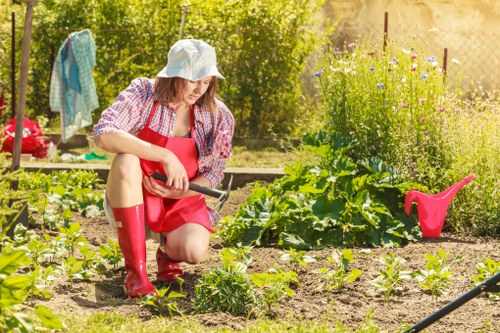 At Landscaping Holborn, recycling and sustainability are built into every stage of our outdoor work. From planting and pruning to full garden clearances, we aim to reduce waste, reuse materials where possible, and keep green projects aligned with a lower-impact approach. Our Holborn landscaping team understands that central London sites often present unique challenges, including limited storage, narrow access, and the need to separate waste efficiently. That is why we plan carefully before every visit, with a focus on keeping recyclable materials out of landfill and supporting a cleaner local environment.
Our sustainability-led landscaping service is designed to work with the realities of the area. In nearby boroughs, waste separation is increasingly important, with mixed recycling streams, garden waste, metals, timber, and inert materials often sorted differently depending on local rules. We follow those expectations closely, helping to ensure that soil, green waste, packaging, and building offcuts are handled in the most responsible way available. This approach is especially valuable for landscaping in Holborn, where projects often take place in shared spaces, courtyards, and compact urban settings.
 We also set a clear recycling percentage target for our operations. Our goal is to recycle or reuse at least 85% of all suitable landscaping waste generated through our work, with a focus on organic materials, clean timber, metal, cardboard, and selected hard landscaping by-products. This target is reviewed regularly so that Holborn landscaping recycling practices continue to improve over time. By tracking the waste from each project, we can identify where more materials can be diverted from disposal and where smarter sorting can make the biggest difference.
Local Waste Handling and Transfer Stations
To support this process, we use local transfer stations and licensed waste facilities serving central London. These sites allow us to separate materials efficiently after collection, which is particularly useful for larger clearances or jobs that produce several waste streams. For example, green cuttings can be processed for composting, while rubble, soil, and aggregates may be sorted for recovery or reuse. Using transfer stations close to Holborn helps reduce transport distances and supports a lower-carbon route for the disposal of unavoidable waste.
In practice, this means that Landscaping Holborn can move waste through a more controlled and traceable system. We aim to send suitable garden waste to composting or organics processing, while keeping recyclable packaging, plastics, and metals separate from general refuse. Where possible, we also collect reusable materials such as intact paving pieces, timber edging, and surplus pots or planters for onward use. This careful separation is especially important in boroughs where environmental standards are driving better recycling outcomes across construction and landscaping services.
Our team works with the principle that the best waste is the waste avoided. Before starting a project, we look for opportunities to reuse existing features, preserve healthy planting, and reduce the amount of material that needs to leave site. In many cases, soil can be screened and reused, branches can be chipped for mulch, and removed plants can be composted rather than discarded. These simple measures help make recycling-focused landscaping in Holborn both practical and effective.
Partnerships with Charities and Community Reuse
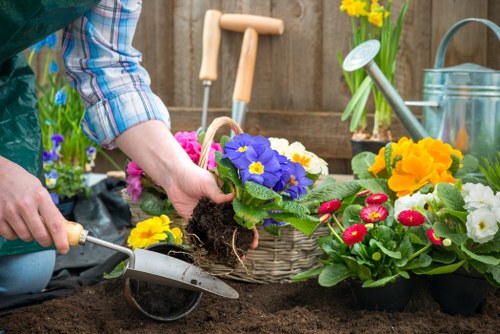 We are also proud to support partnerships with charities and community organisations that give suitable materials a second life. Items such as pots, benches, planters, decorative stone, and some timber offcuts can often be passed on rather than thrown away, provided they remain safe and usable. By collaborating with local donation networks and reuse groups, Holborn landscaping services can help extend the life of materials that might otherwise be sent for disposal. This is one of the most practical ways we can support sustainability while also benefiting community projects.
These partnerships are not limited to surplus materials. They also encourage a wider culture of responsible working, where care, sorting, and reuse are part of the everyday process. In a dense urban district like Holborn, where green spaces are precious and storage is limited, charitable reuse can be particularly valuable. It reduces pressure on waste systems, supports local causes, and reinforces a more circular approach to landscaping. Even small volumes of donated materials can make a meaningful difference when they are redirected to a project that needs them.
At the same time, we make sure that all recycling activity is handled in line with current regulations and best practice. That includes separating hazardous items appropriately, avoiding contamination of recyclable loads, and using approved routes for material transfer. Our commitment to Holborn sustainability landscaping is not just about reducing waste; it is about ensuring every stage of the process is managed responsibly, transparently, and with respect for the wider environment.
Low-Carbon Vans and Smarter Transport
 Transport is another key part of our sustainability approach. We use low-carbon vans where possible, helping to reduce emissions linked to site visits, waste collection, and material deliveries. In central London, where traffic and air quality are major concerns, choosing cleaner vehicles supports both environmental goals and a better experience for local residents, businesses, and passers-by. This is especially relevant for Landscaping Holborn, where many jobs involve frequent short journeys rather than one large collection route.
Our vehicles are selected for efficiency, careful load management, and reduced idle time. We plan routes to minimise unnecessary mileage and combine tasks where practical so that fewer journeys are needed overall. For projects involving mulch, topsoil, plants, or hard landscaping materials, this means deliveries can be coordinated to limit repeated transport movements. Combined with local transfer stations and responsible waste separation, low-carbon vans help us reduce the footprint of each project without compromising service quality.
 Looking ahead, our sustainability commitment will continue to focus on practical improvements that suit the character of Holborn and the surrounding boroughs. That includes stronger recycling performance, better reuse of materials, continued support for charity partnerships, and expanded use of efficient transport solutions. By keeping an eye on local waste rules and maintaining a clear recycling target, Landscaping Holborn aims to deliver outdoor spaces that are not only attractive and functional, but also more responsible in the way they are created and maintained.