Garden design and build in Holborn
If you are looking for garden design and build in Holborn, you are likely working with a space that needs careful thought, practical planning, and a finish that feels right for the property. In this part of central London, gardens and outdoor areas often have to do more than look attractive. They may need to provide a calm private retreat, support outdoor entertaining, improve day-to-day use, or make the most of a compact courtyard, roof terrace, or shared commercial frontage. A well-planned garden can change how a home or workplace feels, and in Holborn, where outdoor space is often limited and access can be tight, design decisions matter even more.
Whether your outdoor area is behind a townhouse, attached to a period conversion, part of a mews property, or sitting beside an office, restaurant, or hospitality venue, the right team can turn it into something usable and lasting. Good garden design is not just about planting. It is about layout, materials, drainage, lighting, storage, privacy, and choosing finishes that suit the way the space is actually used. The build stage then needs to be handled carefully so the design is delivered properly, on schedule, and with attention to detail.
Local knowledge helps because Holborn comes with real practical challenges: narrow streets, shared entrances, basement light conditions, restricted deliveries, awkward access for materials, and a mix of building styles that all need different solutions. Working with a local garden team means these issues are considered from the start, which can save time, reduce disruption, and give you a better result. If you are planning a new garden or upgrading an existing one, now is the right time to request a quote and talk through the options.
Outdoor spaces in Holborn need thoughtful design

Holborn is not a typical suburban setting with large back gardens and easy side access. Outdoor areas here are often compact, enclosed, overlooked, or shared. That means successful garden design and build in Holborn starts with understanding the space as it is, rather than forcing in ideas that suit a different location. A small courtyard can feel much larger when levels, paving lines, and planting are planned well. A terrace can feel calmer and more private when screening and lighting are positioned carefully. Even a modest commercial outdoor area can become a useful feature if circulation, seating, and maintenance are considered properly.
There is also a strong mix of property types in and around Holborn. You will find Georgian and Victorian buildings, modern apartment developments, office premises, converted spaces, and mixed-use buildings. Each one has different constraints and opportunities. Period properties may call for materials that sit comfortably with brick, stone, and sash windows. Contemporary properties may benefit from cleaner lines, structured planting, and a more architectural finish. In both cases, the goal is the same: a garden that suits the setting, supports the way you live or work, and remains practical over time.
Our approach focuses on usable outdoor space. That means the design must work in real life, not only look good on paper. We think about how you move through the area, where the light falls, how water drains, what can be seen from neighbouring windows, and how often the space will be used. For some clients, the priority is a low-maintenance garden that still feels green and welcoming. For others, it is a social space for entertaining. For commercial clients, it may be about first impressions, staff wellbeing, or creating an outdoor setting that complements the business.
What our garden design and build service includes
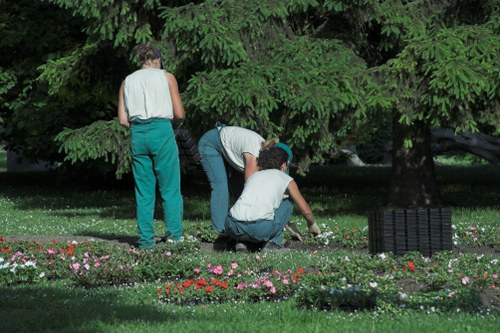
Every project is different, but a full garden design and build service usually brings the creative and practical sides together. That is especially useful in Holborn, where a separate design-only or build-only approach can leave gaps. When one team handles both stages, the ideas are more likely to be achievable, the materials more likely to be suitable, and the final result more likely to match the original vision.
Typical elements of the service can include:
- Initial site visit and discussion of goals, constraints, and preferred style
- Measured layout planning for compact, awkward, or multi-level spaces
- Concept ideas for planting, hard landscaping, seating, and screening
- Selection of materials such as paving, timber, composite, brick, gravel, and steel details
- Construction of patios, steps, retaining features, planters, pergolas, paths, and borders
- Planting schemes suited to light levels, soil conditions, and maintenance preferences
- Garden lighting to improve mood, visibility, and evening use
- Drainage and water management where needed
- Finishing details that make the space feel complete and well resolved
We also take into account the practical side of the build. In Holborn, access can be one of the biggest concerns. Narrow entrances, limited parking, controlled delivery windows, and shared access routes all affect how work is planned. Materials may need to be brought in carefully and in stages. Waste removal must be organised with minimal disruption. If a project involves neighbours, occupiers, or building management, the build plan should respect those relationships from day one.
For customers, that means fewer surprises. You get a clearer process, a smoother schedule, and a finished garden that has been designed around the real conditions of the site. That is one of the biggest benefits of choosing a local team for garden landscaping and construction in central London.
Design ideas that work well for Holborn properties
The best garden designs in Holborn tend to be the ones that make a small or difficult space feel calm, ordered, and easy to use. A common challenge is getting a garden to feel generous even when the footprint is limited. Clever zoning, neat materials, and restrained planting often work better than overcrowding the area with too many features. A small space can still offer room to sit, plant, and move comfortably if the layout is handled well.
Some of the most effective design ideas for local properties include raised planters that add structure and help define boundaries, built-in seating that saves space, and layered planting that brings softness without crowding circulation. In basement or low-light gardens, shade-tolerant planting choices and reflective materials can make the area feel brighter. In courtyards and terraces, vertical planting and privacy screens can help reduce overlooking and create a more sheltered atmosphere. For roof terraces, lightweight materials and careful weight planning are essential.
You may also want to think about the overall style. Some Holborn clients prefer a formal look with symmetrical lines, quality paving, and neatly clipped planting. Others want something softer and more natural, with grasses, evergreen structure, and seasonal colour. A modern commercial space may need a cleaner finish that is low maintenance and durable. Whatever the style, the design should feel like a natural extension of the building rather than an afterthought.
Useful features to consider
These features are often worthwhile in urban gardens:
- Seating areas that are comfortable and positioned for the best light
- Planters and raised beds to create height and structure
- Lighting for safety, ambience, and evening use
- Screening to improve privacy and reduce visual clutter
- Low-maintenance planting for busy homeowners and commercial premises
- Durable paving that suits heavy use and central London weather
The build process: from concept to completion

A good build process is just as important as the design itself. Once the plan has been agreed, the practical work begins. For many local clients, especially in Holborn, clarity around the steps is reassuring. It helps you know what will happen, how long the work may take, and where any disruption is likely to occur. It also keeps the project on track and helps everyone involved stay aligned.
The process often begins with a detailed look at the site. This allows the team to identify access points, surface conditions, drainage issues, existing plants or structures that can be retained, and any factors that might affect construction. After that, the design can be refined into a buildable plan. If there are materials to order, this stage is important because some finishes may need lead time, especially if you want something specific to match a period property or achieve a more bespoke effect.
During construction, the sequence usually follows a logical order: clearing and preparation, groundworks, structural features, paving or decking, planters and boundaries, lighting and drainage, then planting and finishing. On constrained sites, the logistics matter as much as the workmanship. Work may need to be phased so access stays manageable. Waste may need to be removed in smaller loads. Deliveries may need to be timed carefully around neighbouring buildings or business operations. A local team familiar with Holborn conditions can plan around these realities with less guesswork.
High-quality build work shows in the details. Straight lines, neat joints, stable levels, consistent finishes, and planting that is set out properly all contribute to a garden that feels considered. The finished result should look good immediately, but it should also age well and remain practical after repeated use.
Why local knowledge matters in Holborn
Choosing a company experienced in garden design and build in Holborn can make a real difference. Central London projects often face challenges that are less common in suburban settings. These include restricted parking, limited loading options, pedestrian-heavy streets, shared access routes, concierge or building-management requirements, and the need to work carefully around office hours or residential quiet periods. A local company is more likely to anticipate these issues and plan accordingly.
Holborn also sits close to a wide range of nearby areas, including Bloomsbury, Covent Garden, Clerkenwell, Farringdon, Soho, St Pancras, and Chancery Lane. That central location means many projects are on tight plots, in converted buildings, or within mixed-use developments. There is often a need to respect existing architecture while making the outdoor area more attractive and useful. A design team that understands the local mix of residential and commercial properties can suggest solutions that feel appropriate and realistic.
Another benefit of local experience is better awareness of how people actually use outdoor spaces in this part of London. Many clients want a private escape from busy streets, a place to host a few guests, or an exterior setting that feels polished without becoming high maintenance. Commercial clients may need a tidy, professional outdoor environment that supports customers, visitors, or staff. In all cases, the design should be suitable for central London living and working.
Local factors we always consider
These practical details help shape the final result:
- Access for tools, materials, and waste removal
- Parking and loading restrictions
- Overlooking from neighbouring buildings
- Light levels in courtyards, basements, and narrow plots
- Noise and disruption sensitivity in shared or occupied buildings
- Materials that suit the surrounding architecture
Residential and commercial garden projects
Our garden services are suitable for both homeowners and businesses in Holborn. Residential projects often focus on comfort, privacy, and making the best use of limited space. That may include a courtyard garden, a terrace, a small front space, or a roof area that needs a smarter layout. In homes, clients usually want a space that feels personal and restful, with planting that adds softness and structure without creating too much maintenance.
Commercial projects can be very different. Offices, hospitality venues, education settings, and mixed-use developments often need gardens or external areas that are durable, tidy, and easy to manage. The space may need to work for staff breaks, customer seating, or simply improve the appearance of the building. In these settings, materials must stand up to frequent use and planting should be selected with long-term maintenance in mind. The design also needs to suit building operations, which may mean phased working, discreet scheduling, or coordination with facilities teams.
Whether the job is domestic or commercial, the same principles apply: careful planning, quality materials, and a build that is handled with precision. If you want a garden that supports the property rather than competing with it, a locally informed team can help you get there.
What clients often ask for
Common project goals in Holborn include:
- More privacy in overlooked spaces
- A smarter layout for small gardens and courtyards
- Low-maintenance planting with year-round appeal
- Better surfaces for sitting, walking, and entertaining
- Lighting that makes the space usable in the evening
- A polished finish that matches the property
How we approach design details
Good design is often found in the small decisions. The width of a path, the finish of a border, the way a step transitions into a terrace, or the position of a light fitting can all affect how the space feels. In central London gardens, these details are especially important because the space is often limited and the margins for error are small. A neat transition between materials can make a compact garden feel orderly. A clever planting scheme can soften hard boundaries without making the area feel crowded.
We also pay attention to maintenance. A beautiful garden should still suit the time and effort you are prepared to give it. Some clients want easy-care evergreen structure with seasonal highlights. Others are happy to have a richer planting scheme if it delivers more colour and texture. For commercial settings, maintenance simplicity is often essential. The right choice depends on use, budget, and how hands-on you want the garden to be after completion.
Durability matters too. In a busy area like Holborn, where weather, wear, and access conditions can all test a garden, the build needs to be robust. That means solid groundwork, good drainage, and materials chosen for long-term performance. A space that looks good for one summer is not enough; it should remain attractive and functional for years.
Pricing factors to consider
Every garden project is different, so it is best to discuss the scope before drawing conclusions about cost. A few key factors usually influence the price of garden design and build work in Holborn. These include the size of the space, the complexity of the layout, the type of materials selected, the amount of demolition or clearance required, and the difficulty of access. A flat, open space is usually simpler to work in than a basement courtyard with narrow entry points and multiple levels.
Custom features can also affect the budget. For example, built-in seating, pergolas, bespoke planters, lighting systems, irrigation, and specialist paving all add value but also increase the level of work involved. If there are drainage issues, structural concerns, or the need for careful coordination with building management or neighbours, that can also influence the overall scope. The clearest way to understand cost is to request a site visit and a tailored quotation based on your actual space and requirements.
We believe in discussing the main cost drivers clearly, so you can decide where to invest and where to simplify. Some clients want a phased approach, completing the most important elements first and adding extras later. Others want the whole project carried out at once. Either way, the aim is to provide a practical plan that matches your priorities.
Typical budget considerations include:
- Ground preparation and waste removal
- Hard landscaping materials
- Access and logistics
- Planting size and quantity
- Lighting and electrical work
- Specialist joinery or bespoke features
Preparation checklist before your project starts
Preparing well can make the build run more smoothly and reduce delays. Before work begins, it helps to think about how you use the space now, what is not working, and what you want the finished garden to achieve. If there are items to move, plants to keep, or areas that need temporary protection, it is useful to decide that in advance.
Here is a simple checklist that often helps clients in Holborn:
- List your main priorities, such as privacy, seating, planting, or low maintenance
- Measure the rough size of the space if you can, or note any awkward features
- Consider how you access the garden and whether there are any restrictions
- Think about which existing features are staying and which need replacing
- Gather any style preferences, materials, or reference ideas you like
- Check any building or lease considerations that may affect the work
- Decide whether the project needs to be done in one phase or in stages
Good preparation saves time later. It also helps the design team produce a more accurate proposal and a result that reflects your needs. If you are ready to move forward, book your site visit or ask for a tailored quote.
What makes a garden feel successful after the build
A successful garden is one that is easy to use, pleasant to spend time in, and suited to the property. In Holborn, that often means a space that feels quieter and more private than the street outside, even when the overall footprint is small. It may also mean the garden works in more than one way: a place for morning coffee, an area for evening dining, a setting for business breaks, or simply a cleaner, more attractive view from inside the property.
Good gardens also age well. Planting should mature in a controlled way rather than becoming messy. Materials should be robust enough to handle weather and everyday use. Drainage should prevent standing water. Lighting should feel subtle and practical rather than overpowering. These are the signs of thoughtful design and build work, and they are especially important where space is precious.
When a project has been planned properly, the space tends to feel calm, intuitive, and balanced. That is the standard we aim for on every project, whether it is a small private courtyard or a larger shared exterior area.
Areas covered around Holborn
Our work in and around Holborn can support customers across nearby central London locations. This often includes projects close to Bloomsbury, Covent Garden, Clerkenwell, Farringdon, Chancery Lane, Fitzrovia, Soho, St Pancras, and surrounding parts of the West End and Midtown. These areas share similar challenges, including compact plots, shared access, period buildings, and the need for careful planning around busy streets.
If your property sits near a commercial district, a residential block, or a mixed-use development, a local garden design and build service can be especially helpful. We understand the pressures of central locations and the importance of working neatly and efficiently. That is true whether the project is for a home, a workplace, or an outdoor area used by customers and staff.
Frequently asked questions
Can you design a garden if the space is very small?
Yes. Small gardens, courtyards, and terraces can be transformed with the right layout. The key is to prioritise what matters most and avoid overcrowding the area.
Do you work on both homes and businesses?
Yes. We support residential and commercial customers across Holborn and nearby areas, adapting the design and build approach to suit the property and how the space will be used.
What if access is difficult?
That is common in central London. We plan carefully for narrow access, limited parking, and restricted deliveries, so the work can be carried out efficiently and with less disruption.
Can you help if I only have an idea and no full plan?
Absolutely. Many projects begin with a rough idea, a few concerns, and a wish list. From there, the design can be developed into something practical and buildable.
How long does a project take?
It depends on the size, access, and complexity of the work. Some projects are relatively straightforward, while others involve more detailed construction or phased planning. A site visit helps establish a realistic schedule.
Will the design take maintenance into account?
Yes. We can shape the planting and material choices around how much upkeep you want. Low-maintenance options are often popular for busy households and commercial spaces.
Ready to improve your outdoor space?
If you are planning a new garden or updating an existing one, a local garden design and build in Holborn service can help you turn a difficult or underused area into something far more practical and attractive. From the first conversation through to the final planting, the aim is to create a space that suits your property, your lifestyle, and the realities of central London living.
Whether your priority is privacy, low maintenance, better use of space, or a more polished outdoor setting, a carefully managed project can make a big difference. Contact us today to discuss your ideas, request a free quote, or book your service now and take the first step toward a garden that works properly for you.